How to Write an SOP People Actually Follow (Template Included)
The short answer
A standard operating procedure (SOP) is a short written guide to doing one recurring task the same way every time. A good one fits on a page: purpose, when it applies, who owns it, numbered steps that each start with a verb, the checks that prove it was done right, and what to do when something goes wrong. Write it while doing the task, test it with someone new, and review it on a set date.
Most SOPs fail for the same reason: they are written once, by someone who already knows the job, in a format nobody reads. A useful SOP is short, written from actually doing the task, and tested by someone who has never done it.
When you need an SOP
Write one when a task happens often, matters when it goes wrong, and is done by more than one person. Opening and closing, receiving deliveries, onboarding a customer, month-end billing and handling a complaint are typical candidates. Skip it for one-off projects and tasks only one expert ever does.
The structure that works
SOP: RECEIVING A PALLET
Purpose
- Get every delivery checked, labeled and stored the same day.
When
- Any pallet delivery for a customer account.
Owner
- Shift lead on duty.
Steps
- 1. Open the advance shipping notice on the scanner.
- 2. Count cartons and compare with the notice.
- 3. Photograph any damage before signing.
- 4. Print and apply labels at the dock.
- 5. Put away to the assigned location this shift.
- 6. Mark received in the system and notify the customer.
Check
- Count, photos and location match the system.
If something is wrong
- Short or damaged: note it on the delivery slip, then message the account owner.
Version 3. Last tested by a new hire on the date. Review in six months.
- Purpose: one line on what good looks like.
- When: the trigger that starts the procedure.
- Owner: a role, not a person’s name, so it survives staff changes.
- Steps: numbered, one action each, starting with a verb. Seven or fewer if you can.
- Check: how anyone can confirm it was done right.
- If something is wrong: the two or three most common problems and what to do.
- Version and review date: so people know it is current.
How to write it
- Write while doing. Do the task and write each step as you go, or record yourself talking it through and turn that into steps. AI assistants are good at this conversion; our guide to using Claude for business covers it.
- Use photos. A photo of the right label position beats a paragraph.
- Write for the newest person. Avoid shorthand and internal nicknames.
- Keep the why short. One line on why a step matters makes people far more likely to follow it.
Test it with someone new
Hand the draft to someone who has never done the task and watch them follow it without help. Every question they ask is a missing step. Fix the SOP, not the person.
Keep it current
- Put a review date on every SOP, usually six or twelve months out.
- Update it the same day a process changes, and bump the version number.
- Keep SOPs where the work happens: a binder at the dock, a pinned message in the team chat, a link in the checklist app.
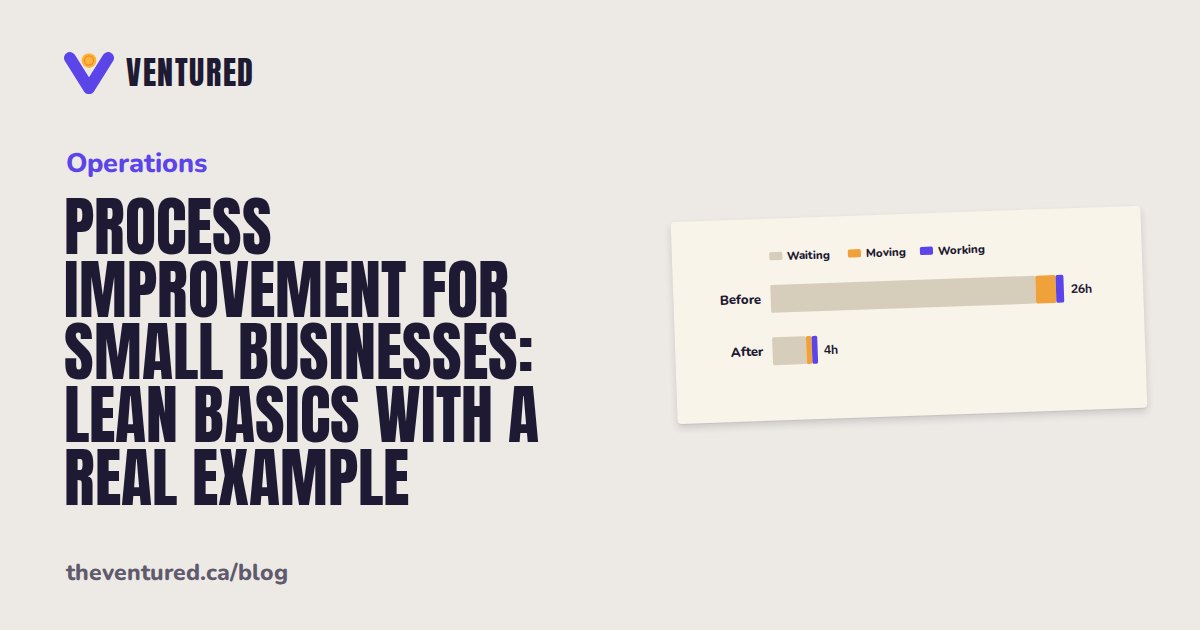
An SOP is also how a process improvement sticks: once you find a better way, write it down so it becomes the normal way.
Bottom line
A good SOP is one page, written while doing the task, tested by someone new and reviewed on a schedule. Steps start with verbs, checks prove the work was done, and the most common problems have a written answer.
Common questions
What is an SOP?
A standard operating procedure: a short written guide to completing one recurring task the same way every time, with steps, checks and what to do when something goes wrong.
How long should an SOP be?
One page for most tasks. If it needs more, split it into separate procedures or move background information into a training guide.
How often should SOPs be updated?
Whenever the process changes, plus a scheduled review every six to twelve months. Put the version and review date on the document.