Process Improvement for Small Businesses: Lean Basics With a Real Example
The short answer
Process improvement means making a repeated piece of work faster, cheaper or more reliable by removing steps that add no value. In Lean terms, most of the time in a process is waiting, moving and rework, not actual work. Map the process, measure where the time goes, remove the biggest waste, and test the change with a Plan-Do-Check-Act cycle before making it the new standard.
You do not need a consultant or a black belt to improve a process. You need to look at one piece of repeated work, measure where the time actually goes, and remove what does not help the customer. The ideas below come from Lean, the approach that grew out of the Toyota Production System, scaled down for a small business.
The eight wastes
Lean sorts waste into eight types. A handy way to remember them is the word DOWNTIME:
- Defects: mistakes that need rework, refunds or apologies.
- Overproduction: making or doing more than anyone needs yet.
- Waiting: work sitting still between steps.
- Non-utilized talent: people’s ideas and skills going unused.
- Transportation: moving items or information more than necessary.
- Inventory: stock or unfinished work piling up.
- Motion: people walking, searching or reaching more than necessary.
- Extra-processing: steps the customer does not value, like double data entry.
Map where the time goes
Pick one process and follow a single item through it, noting each step and how long it takes. Then label every minute as working (changing the item in a way the customer would pay for), moving or waiting. This is a simple version of value stream mapping, and the result is almost always the same: work is a small fraction of the total time.
A worked example: receiving a pallet
Here is an illustrative example from a small warehouse that receives pallets for its customers. Following one pallet from the truck to its storage spot took 26 hours:
- The pallet waited at the dock until someone was free, often until the next morning.
- A staff member walked to the office to find the paperwork and compare it to the packing list by hand.
- Labels were printed in the office and walked back.
- The pallet waited again for a forklift and was put away.
- The inventory system was updated at the end of the day from paper notes.
The actual work, checking and labeling, took about 40 minutes. The team made three changes: customers send an advance shipping notice so paperwork is ready before the truck arrives, a handheld scanner prints labels at the dock, and put-away happens in the same shift. Receiving fell to about 4 hours.
Plan, Do, Check, Act
Do not change everything at once. Pick the single biggest waste, try a fix on a small scale, measure it against the old process, and only then make it standard. If it does not work, you have lost a week, not a quarter.
Where small businesses usually find waste
- Handoffs: work waiting in an inbox between two people.
- Double entry: typing the same data into two systems.
- Searching: looking for files, tools or stock without a fixed home.
- Approvals: small decisions waiting for the owner.
- Rework: errors caught late, after the customer noticed.
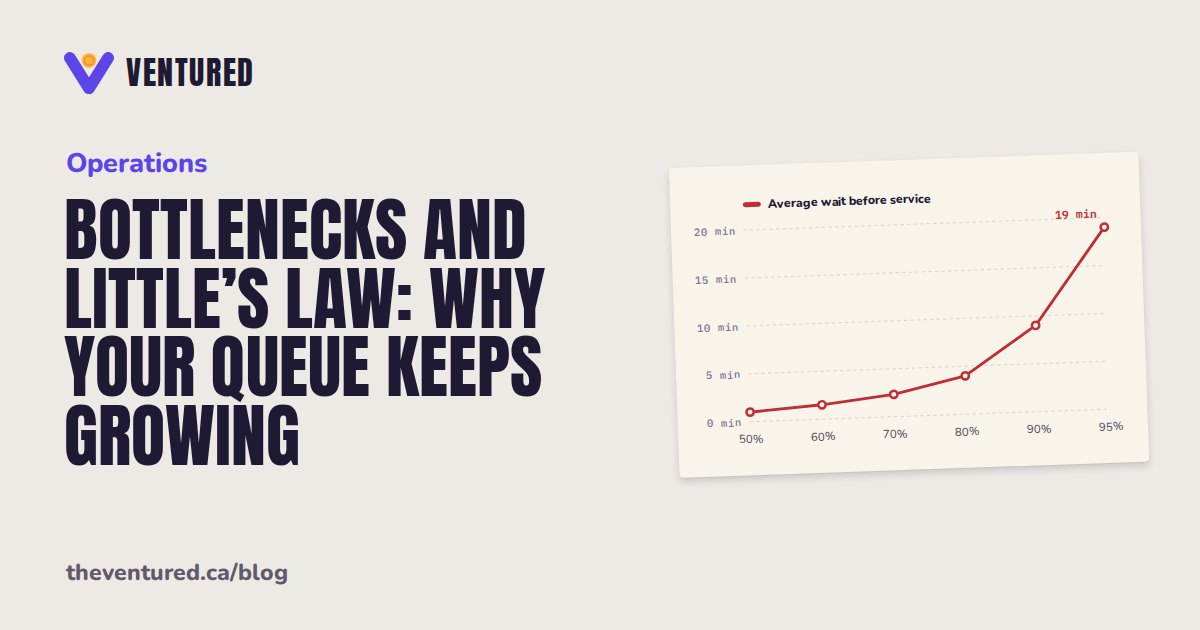
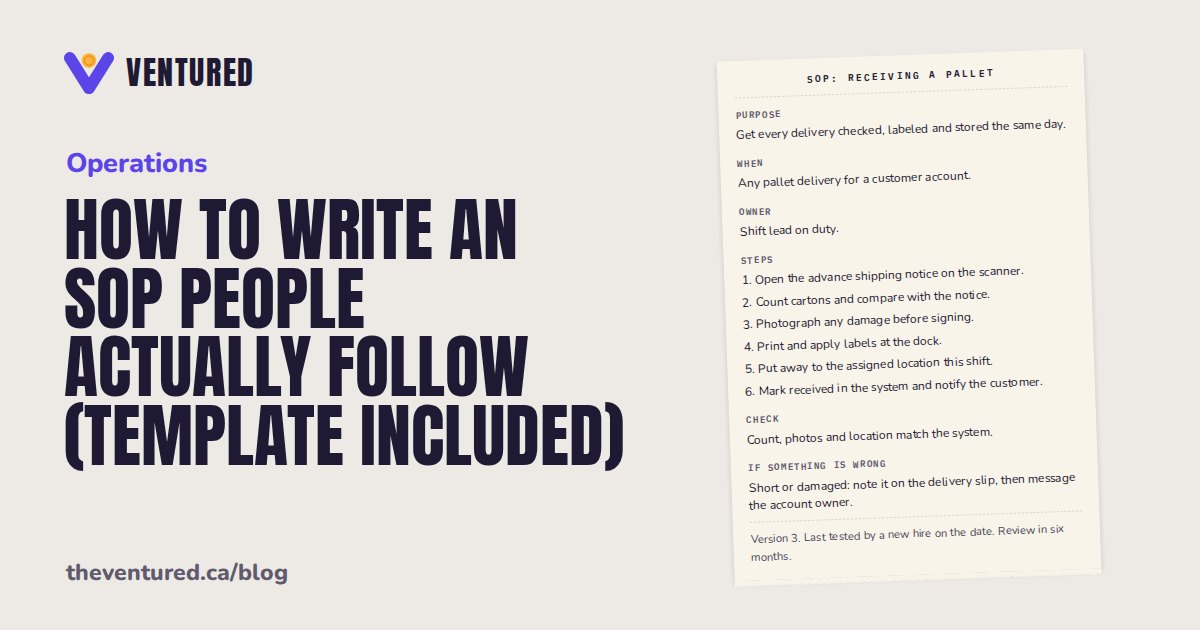
Once a process is improved, write it down so the gains stick; our SOP guide shows how. If work keeps piling up at one step, read about bottlenecks and Little’s Law.
Bottom line
Most of the time in most processes is waiting, moving and rework. Map one process, label where the time goes, fix the biggest waste with a small test, and make what works the standard. Repeat every month and the gains add up.
Common questions
What is Lean process improvement?
A method, rooted in the Toyota Production System, for delivering the same value with less waste. It focuses on removing waiting, rework, unnecessary movement and other steps customers do not value.
What are the eight wastes of Lean?
Defects, overproduction, waiting, non-utilized talent, transportation, inventory, motion and extra-processing, often remembered as DOWNTIME.
What is the PDCA cycle?
Plan-Do-Check-Act: plan one change, try it on a small scale, check the results against the baseline, then act by making it standard or trying something else.