AI in Business: 6 Case Studies and What the Research Shows
The short answer
Measured studies show real gains from AI at work, with limits. Customer support agents resolved 14% more issues per hour (34% for newer agents), consultants worked about 25% faster with higher-quality output on suitable tasks, developers finished a coding task about 56% faster, and writers cut task time by 40%. Gains are biggest for less experienced workers, and quality drops when AI is used on tasks outside its strengths.
There is no shortage of AI claims. There is a shortage of measured results. These six cases are among the most cited, either because they were run as proper experiments or because the company published hard numbers and then had to live with them.
1. Klarna’s customer service assistant
In February 2024, the payments company Klarna said its AI assistant handled two-thirds of its customer service chats in its first month, about 2.3 million conversations, doing the equivalent work of 700 full-time agents. It reported resolution times falling from 11 minutes to under 2, a 25% drop in repeat inquiries, and customer satisfaction on par with human agents. In May 2025, its CEO told Bloomberg the company would hire more human agents so customers could always reach a person, saying cost had been too dominant a factor and quality had suffered. Klarna has since said the assistant still handles most chats.
Lesson: AI can absorb a large share of routine contacts, but a cost-only target hurts quality. Keep an easy path to a human.
2. Customer support agents at a software company
Economists Erik Brynjolfsson, Danielle Li and Lindsey Raymond studied 5,179 support agents who gradually got an AI assistant that suggested replies. Agents with access resolved 14% more issues per hour on average. Newer and lower-skilled agents improved by 34%, while the most experienced agents saw little change.
Lesson: AI spreads the know-how of your best people to your newest ones. Onboarding is often where the biggest gains are.
3. Consultants at Boston Consulting Group
A Harvard Business School study with 758 BCG consultants found that on tasks inside AI’s capabilities, those using GPT-4 completed 12.2% more tasks, worked 25.1% faster and produced work rated more than 40% higher in quality. On a task deliberately chosen to fall outside those capabilities, consultants using AI were 19 percentage points less likely to reach the correct answer than those without it.
Lesson: the researchers called this a jagged frontier. AI is excellent at some tasks and confidently wrong on others that look similar. Know which is which before you rely on it.
4. Software developers and GitHub Copilot
In a controlled experiment, developers with GitHub Copilot finished a programming task, building a simple web server, 55.8% faster than developers without it.
Lesson: well-defined tasks with a clear finish line are where AI speed shows up most reliably.
5. Professional writing tasks
A study published in Science gave 453 professionals realistic writing tasks such as press releases and short reports. With ChatGPT, time per task fell by 40% and output quality, as rated by evaluators, rose by 18%.
Lesson: first drafts are the cheapest place to start. The gains came from speed on the draft, with people still shaping the final text.
6. Morgan Stanley’s advisor assistant
In 2023, Morgan Stanley Wealth Management rolled out an internal assistant built on GPT-4 that lets its financial advisors search and summarize the firm’s large library of research and procedures in plain language.
Lesson: one of the safest, most valuable uses of AI is helping your own people find what your company already knows.
What this means for your business
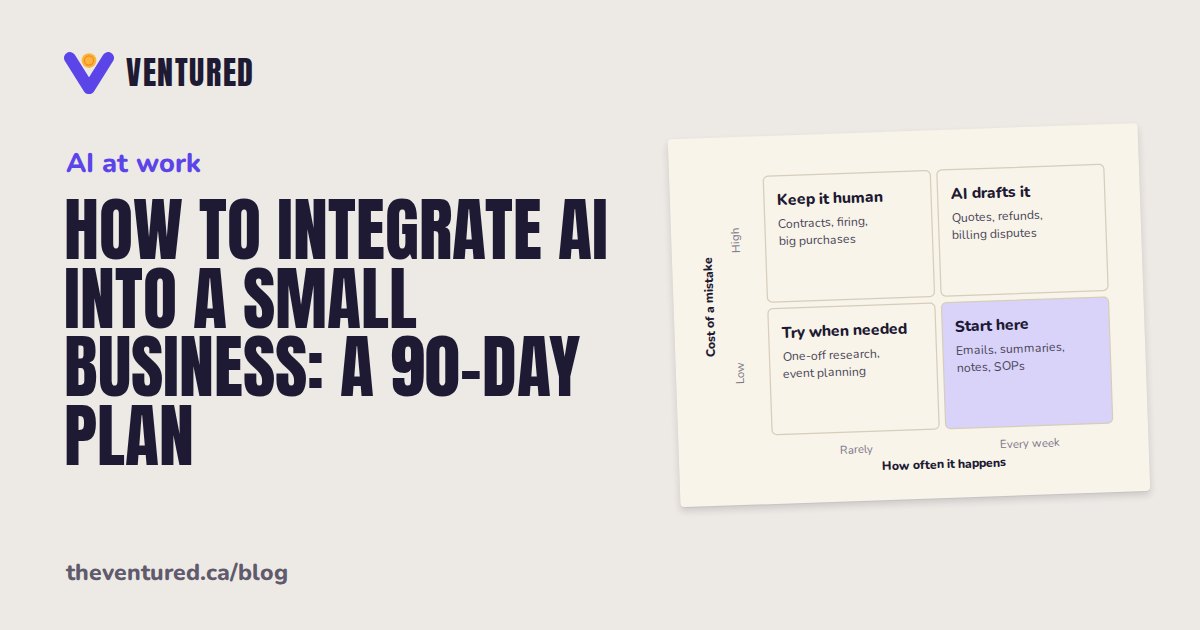
- Start where work is frequent and checkable. Support replies, drafts and summaries showed the clearest gains.
- Expect the biggest lift for newer staff. Use AI in onboarding and training.
- Map the jagged frontier. Test AI on your real tasks and note where it fails, not just where it shines.
- Measure quality, not only cost. Klarna’s experience shows what happens when cost is the only target.
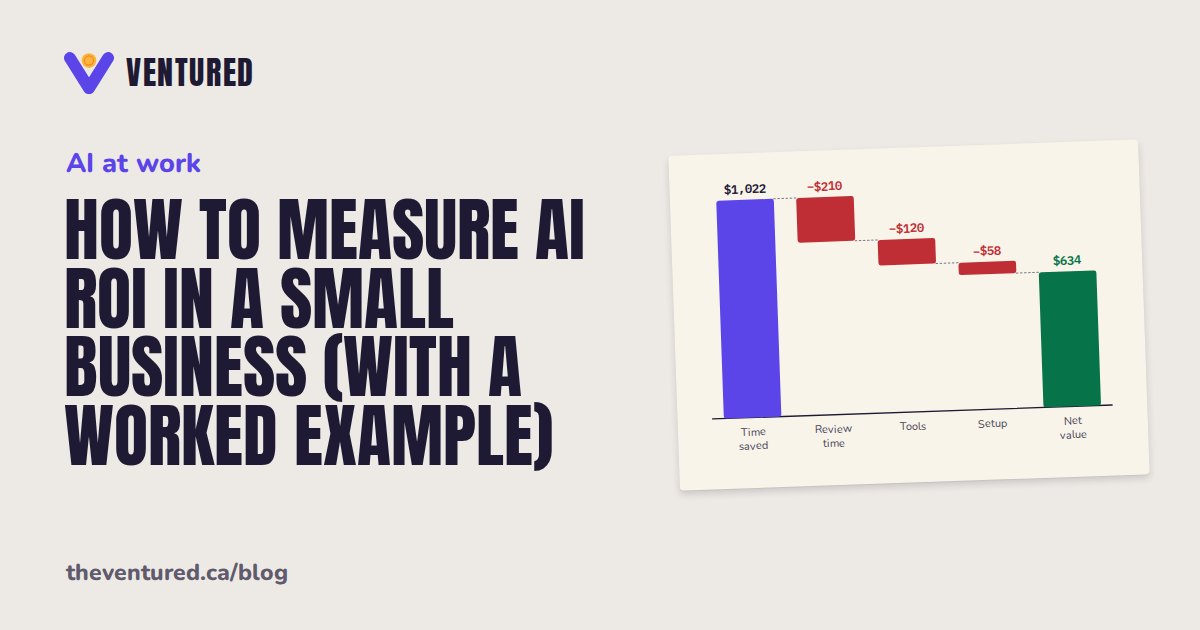
To turn this into a plan, see our 90-day AI rollout and how to measure AI ROI.
Bottom line
The evidence is consistent: AI makes people faster and often better on suitable tasks, helps less experienced staff most, and quietly hurts quality when used outside its strengths. Businesses that measure both speed and quality get the gains without the surprises.
Sources
- Brynjolfsson, Li and Raymond, “Generative AI at Work,” NBER Working Paper 31161 (2023)
- Dell’Acqua et al., “Navigating the Jagged Technological Frontier,” Harvard Business School Working Paper 24-013 (2023)
- Peng et al., “The Impact of AI on Developer Productivity: Evidence from GitHub Copilot” (2023)
- Noy and Zhang, “Experimental evidence on the productivity effects of generative artificial intelligence,” Science (2023)
- Fast Company on Klarna’s February 2024 results
- Entrepreneur on Klarna’s May 2025 change of course
Common questions
Does AI actually increase productivity at work?
In controlled studies, yes: 14% more support issues resolved per hour, about 25% faster consulting work on suitable tasks, 40% less time on writing tasks and 56% faster completion of a coding task. Results depend heavily on the task.
Which workers benefit most from AI?
Less experienced workers. In the customer support study, newer agents improved by 34% while the most experienced barely changed, because the AI passed on patterns learned from top performers.
What is the biggest risk of using AI at work?
Using it on tasks where it is confidently wrong. In the BCG study, consultants using AI on an unsuitable task were 19 percentage points less likely to get the right answer.